Attic Spray Foam Insulation
The single highest-impact insulation upgrade for a Jacksonville home — the attic takes the most direct sun and humidity load in the house, and it's usually the least sealed part of the envelope.
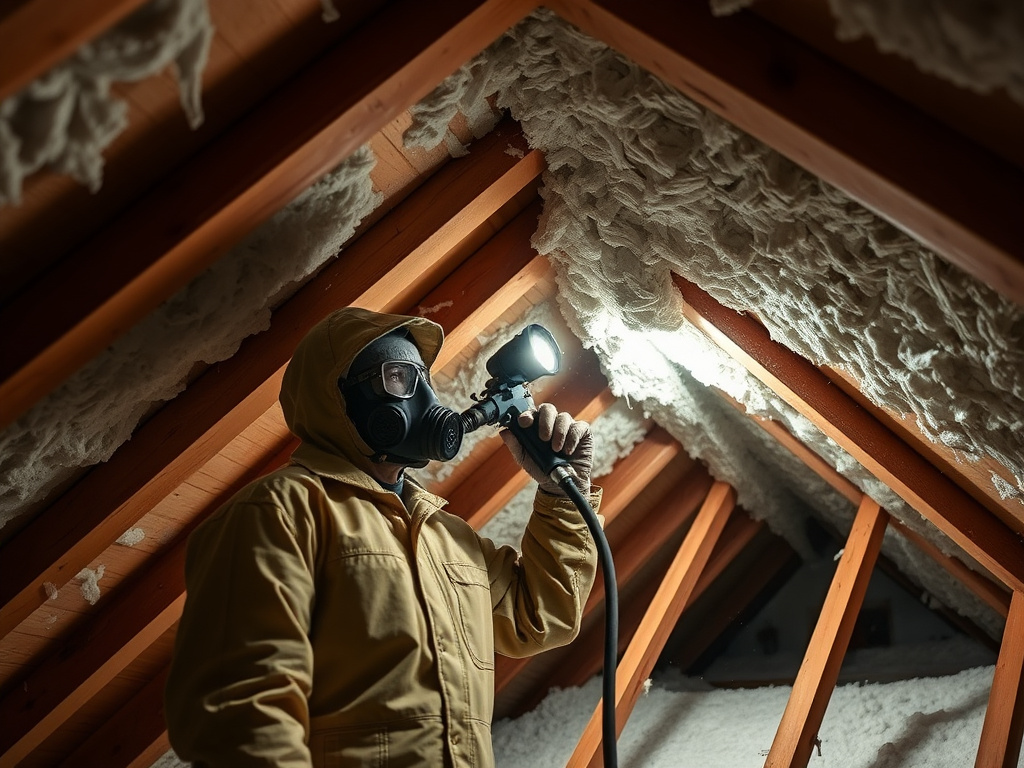
Jacksonville sits in IECC Climate Zone 2A, a hot-humid coastal climate where summer relative humidity commonly runs 74-95% and the roof deck absorbs both heat and moisture-laden air for most of the day. In a vented attic with thin, settled, or gap-riddled insulation, that hot, humid air moves straight through the ceiling into living space and drives the AC to run longer just to hold a setpoint — and it can also carry enough moisture into the attic to support mold growth on framing and ductwork. The Department of Energy's general guidance for hot-humid Zone 2 homes points to attic insulation in roughly the R30 to R49 range depending on your starting point, and a lot of older Jacksonville homes are running well below that.
Spray foam insulation addresses this two ways at once: it insulates against heat transfer and it air-seals the attic in the same application, closing the gaps around wiring penetrations, top plates, and duct boots that fiberglass batts simply lie across without sealing. We install both roof-deck application (spraying the underside of the roof deck to bring the attic itself inside the home's conditioned, air-sealed envelope — especially valuable given how common attic-run ductwork is in Northeast Florida construction, and how much humid outside air a vented attic exchanges) and traditional attic-floor application, and we'll walk you through which approach fits your home's specific framing, duct layout, and roof condition during your free on-site assessment.
Why homeowners choose it
- Cuts the single largest source of heat and humidity gain in a Jacksonville home — the roof deck and attic floor, which absorb sun and humid outside air more than any other surface.
- Air-seals and insulates in one application, closing the gaps around duct boots, top plates, and wiring penetrations that batts leave open to humid attic air.
- Roof-deck application brings attic-housed ductwork inside the conditioned, air-sealed envelope, reducing both heat gain and condensation risk on ducts sitting in a hot, humid vented attic.
- Closed-cell roof-deck foam also bonds to the underside of the roof sheathing, adding meaningful resistance to wind uplift at the sheathing-to-framing connection — a genuine construction-performance benefit in a hurricane-adjacent region.
- Reduces AC cycling and runtime, which is where the majority of a Jacksonville home's summer electric bill goes.
Roof-deck vs. attic-floor application
Attic-floor application is the traditional approach — foam is sprayed across the attic floor between joists, keeping the attic itself vented while insulating the living space below. It's the more budget-friendly option and works well when ductwork isn't a factor and the existing roof vents are functioning correctly.
Roof-deck (unvented/conditioned attic) application sprays foam directly to the underside of the roof deck and gable ends, effectively bringing the whole attic inside the home's thermal and air-sealed envelope. This is the stronger choice when HVAC ductwork runs through the attic, since it protects that ductwork from extreme attic heat and humidity, and it removes the vented soffits and ridge vents that can otherwise pull wind-driven rain and humid air into the attic during coastal storms.
- Attic-floor: lower cost, vented attic stays as-is
- Roof-deck: protects attic ductwork and reduces wind-driven rain intrusion, higher upfront cost, best for homes with attic-mounted HVAC
Open-cell or closed-cell for your attic?
Both are used in Jacksonville attics, but the humid climate shifts the calculus compared to a dry climate. Closed-cell delivers more R-value per inch and acts as a moisture barrier, which matters directly here — it resists absorbing the humid air that a Florida attic is exposed to and adds real roof-deck adhesion. Open-cell is more cost-effective per board foot and still performs well for attic-floor coverage in a vented attic, but because it's vapor-permeable, we generally don't recommend it alone as the primary layer on an unvented roof deck in this climate without additional moisture-control detailing. A common approach uses closed-cell as the roof-deck layer and open-cell to fill remaining depth or for attic-floor coverage elsewhere. We'll recommend the right mix for your specific roof assembly and moisture exposure.
Ideal for
- Homes with visibly thin, compressed, or unevenly distributed attic insulation
- Homes with ductwork running through an unconditioned, humid attic
- Older Jacksonville homes built before more recent energy code cycles
- Homeowners who've noticed a musty attic smell, hot upstairs rooms, or a straining AC system
What affects the cost
Attic Insulation questions, answered
Spray foam insulation in the Jacksonville area typically runs in the range of $1 to $5 per square foot installed, with most projects averaging around $3 per square foot — closed-cell running higher than open-cell. A typical single-family attic project often lands in the $1,500-$2,000 minimum range and scales up with square footage and whether it's roof-deck or attic-floor coverage. A free on-site assessment gets you a firm number for your home.
For homes with thin, settled, or gap-riddled attic insulation, yes — often meaningfully. Because spray foam air-seals as it insulates, it closes the pathways that let hot, humid attic air and radiant roof heat into the living space, which is what drives most of the AC runtime behind a Jacksonville summer electric bill. Sealing those same pathways also cuts down on the humid air exchange that contributes to a musty attic smell. Industry estimates suggest a 20-40% reduction in cooling costs is achievable for a poorly insulated humid-climate home, though actual savings depend on your home's starting condition.
Attic Insulation done right, by a local Jacksonville crew
Attic Insulation isn't a commodity — the result depends entirely on how carefully it's planned and installed for your specific home and Jacksonville's real hot-humid coastal climate. We assess what your house actually needs, prep and air-seal properly, and install to your Zone-2A-appropriate R-value target, so the work delivers the comfort, moisture control, and savings it's supposed to.
We serve Jacksonville, Jacksonville Beach, Orange Park, St. Augustine, Fleming Island, Ponte Vedra Beach, Middleburg, and Yulee. Every job starts with a free, no-pressure quote.
Just as important, we treat your home like the system it is. Insulation, air sealing, ductwork, and moisture control all interact, and getting one right while ignoring the others leaves comfort and savings on the table. When we scope your attic insulation, we look at how it fits the whole picture — so the finished result performs the way it should, holds up through a genuine Jacksonville summer, and actually lowers the bills you feel every month.
Free assessment
We evaluate your home and give you a clear, itemized quote.
Expert install
We prep, air seal, and install your attic insulation to spec — clean and on schedule.
Savings you can feel
A cooler home, lower cooling bills, and honest advice about what your home needs.
Related services
Ready for a free attic insulation quote?
Tell us about your home and we'll put together a clear, no-pressure spray foam insulation quote — built for Jacksonville's real hot-humid coastal climate.