Wall Spray Foam Insulation
Exterior walls take direct sun and humid coastal air all day in Jacksonville — spray foam air-seals and insulates every stud cavity so heat, humidity, and outside noise stop at the wall instead of moving inward.
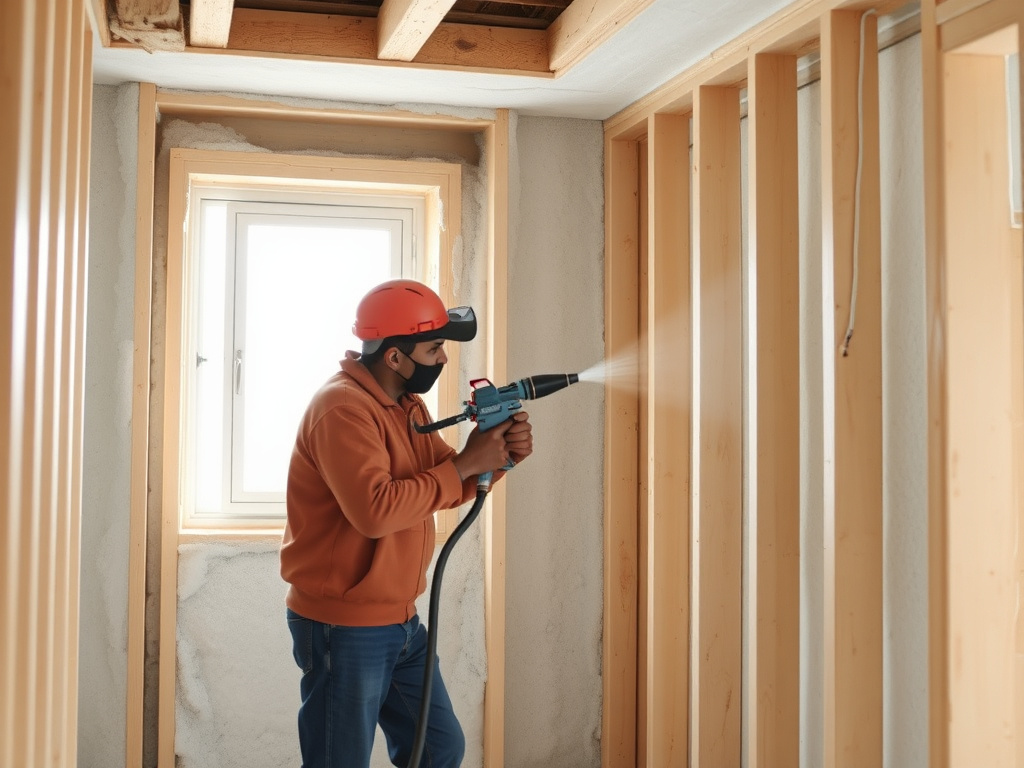
After the attic, exterior walls are the next-largest surface area exposed to Jacksonville's climate — west- and south-facing walls take a heavy radiant heat load through the hottest part of the day, while every exterior wall stays under near-constant humid-air pressure for most of the year. Standard fiberglass batt insulation fills the stud cavity but doesn't seal it, leaving gaps around outlets, top and bottom plates, and stud-to-drywall junctions where heat and humid outside air still move through. Spray foam fills the cavity completely and air-seals it in the same step, which is the difference that actually shows up in how a room feels in August and in how the wall assembly holds up to Northeast Florida's humidity over the years.
Wall spray foam works for both new construction, where studs are open and access is straightforward, and retrofits on additions or remodels where walls are already open for other work. We typically don't recommend tearing into finished exterior walls on an existing home purely for insulation — that's a significant, invasive project — but for any wall that's already open, adding spray foam instead of batt insulation is a meaningfully better long-term investment for the same labor, particularly given the moisture-management upside closed-cell brings to an exterior-exposed Jacksonville wall assembly.
Why homeowners choose it
- Fills stud cavities completely and air-seals around outlets, plates, and framing gaps that batt insulation leaves open.
- Reduces radiant heat and humid-air infiltration through exterior walls, which take on both sun exposure and near-constant humidity pressure in a Jacksonville home.
- Closed-cell wall application adds a genuine moisture-management layer to exterior-exposed assemblies, relevant given Florida's year-round humidity.
- Adds real sound dampening against street noise and neighboring properties, a secondary benefit alongside the thermal performance.
- Doesn't settle or compress inside the wall cavity over the life of the home, unlike batt insulation that can shift over decades.
New construction vs. remodel walls
New-construction walls are the most cost-effective time to spray foam — open studs, no existing finishes to protect, straightforward access. For an existing home, wall spray foam makes the most sense when a wall is already open for a remodel, addition, or repair; we don't recommend demolishing finished walls solely to add insulation, since the cost and disruption rarely pencil out against the thermal gain versus other upgrades like attic insulation.
Ideal for
- New-construction homes with open wall framing
- Additions and remodels where walls are already open for other work
- West- and south-facing exterior walls carrying the heaviest sun and humidity exposure
- Homeowners prioritizing sound dampening and moisture management alongside thermal performance
What affects the cost
Wall Insulation questions, answered
Generally, we only recommend spray foam for walls that are already open — during new construction, an addition, or a remodel where drywall is already coming down for other reasons. Tearing into finished walls solely to add insulation is a significant, costly project, and for most Jacksonville homes, attic insulation delivers a bigger comfort and moisture-control return for the investment. We'll give you a straight answer on which upgrade makes sense for your situation.
For exterior-exposed walls, closed-cell foam's moisture-barrier property is a real secondary benefit alongside thermal performance — it resists absorbing humid air the way a fiberglass batt cavity can, which matters in a climate where exterior walls are under near-constant humidity pressure. Open-cell foam, used on interior walls, doesn't provide that moisture barrier but does add genuine sound dampening.
Wall Insulation done right, by a local Jacksonville crew
Wall Insulation isn't a commodity — the result depends entirely on how carefully it's planned and installed for your specific home and Jacksonville's real hot-humid coastal climate. We assess what your house actually needs, prep and air-seal properly, and install to your Zone-2A-appropriate R-value target, so the work delivers the comfort, moisture control, and savings it's supposed to.
We serve Jacksonville, Jacksonville Beach, Orange Park, St. Augustine, Fleming Island, Ponte Vedra Beach, Middleburg, and Yulee. Every job starts with a free, no-pressure quote.
Just as important, we treat your home like the system it is. Insulation, air sealing, ductwork, and moisture control all interact, and getting one right while ignoring the others leaves comfort and savings on the table. When we scope your wall insulation, we look at how it fits the whole picture — so the finished result performs the way it should, holds up through a genuine Jacksonville summer, and actually lowers the bills you feel every month.
Free assessment
We evaluate your home and give you a clear, itemized quote.
Expert install
We prep, air seal, and install your wall insulation to spec — clean and on schedule.
Savings you can feel
A cooler home, lower cooling bills, and honest advice about what your home needs.
Related services
Ready for a free wall insulation quote?
Tell us about your home and we'll put together a clear, no-pressure spray foam insulation quote — built for Jacksonville's real hot-humid coastal climate.