Open-Cell vs. Closed-Cell Spray Foam: Which Is Right for Your Jacksonville Home?
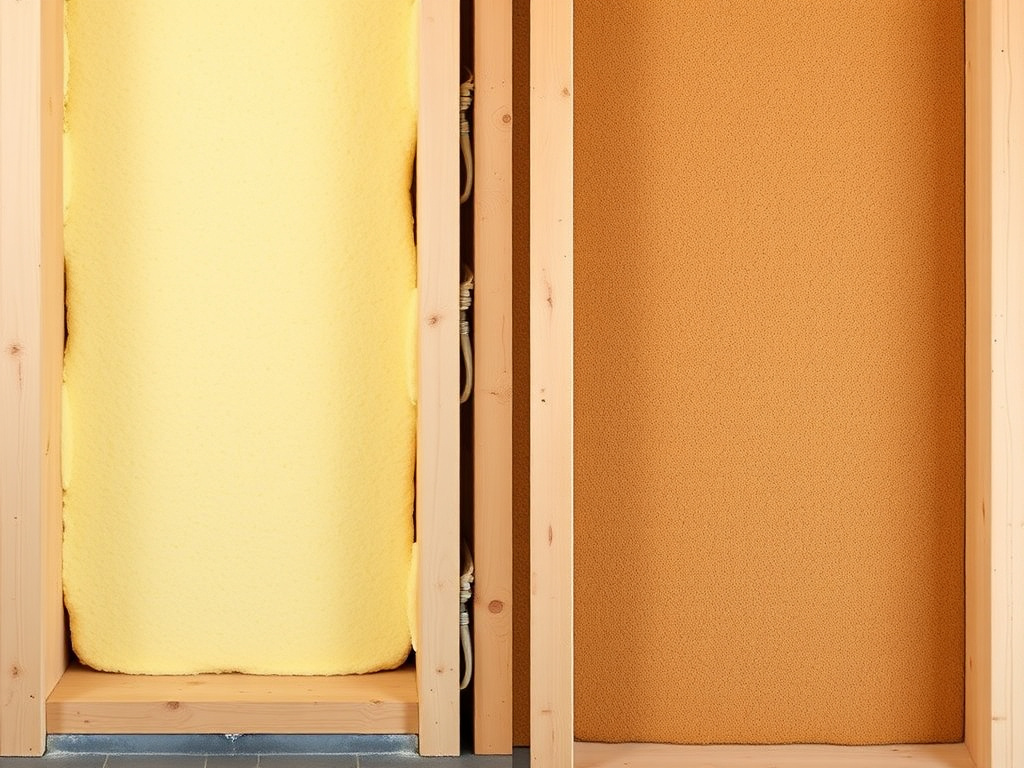
"Which spray foam do I need?" is one of the first questions we get on almost every project, and in Jacksonville the honest answer leans harder toward closed-cell than it would in a dry climate. Open-cell and closed-cell aren't a better-vs-worse choice — they're built for different jobs, and the right project often uses both, but the moisture question carries real weight here in a way it simply doesn't in an arid market.
The core differences
- R-value per inch: open-cell delivers roughly R-3.5 to R-4; closed-cell delivers roughly R-6 to R-7.
- Density: open-cell is soft and spongy; closed-cell is rigid and adds structural strength to the assembly it's sprayed into.
- Moisture: closed-cell acts as a genuine vapor and moisture barrier; open-cell is vapor-permeable, which is a real limitation in Jacksonville's humid, coastal, hurricane-adjacent climate — not a minor detail the way it might be in a dry region.
- Cost: open-cell costs less per board foot; closed-cell costs more but delivers more R-value and moisture protection in less depth.
- Sound dampening: open-cell's structure absorbs sound noticeably better than closed-cell.
Where open-cell still makes sense in Jacksonville
Interior partition walls, vented attic floors with adequate depth and functioning ventilation, and any room where sound dampening matters — a media room, a home office next to a garage — are strong fits for open-cell, provided the space stays dry and protected from exterior moisture. Cost is the main reason to reach for it: for interior, protected applications, it does the job well for meaningfully less than closed-cell.
Where closed-cell is usually the right call in Jacksonville
Roof decks, exterior walls, garages, and any assembly exposed to Jacksonville's year-round humidity, coastal proximity, and hurricane-adjacent wind-driven rain are the strongest cases for closed-cell — and in this climate, that's a longer list than it would be in a dry market. Closed-cell's moisture-barrier property directly addresses the humid-air infiltration that drives mold and musty odors, and its roof-deck adhesion adds real wind-uplift resistance as a construction-performance benefit. It costs more, but in these applications the performance difference is usually worth the premium here.
When a project uses both
It's common for a whole-home or new-construction project to use closed-cell in high-exposure, moisture-prone areas — the roofline, exterior walls, the garage — and open-cell for interior walls elsewhere. That combination gets moisture protection where it matters most without paying closed-cell pricing on every square foot.
Frequently asked questions
For exterior-exposed assemblies and roof decks, yes, closed-cell's moisture-barrier property makes it the stronger default choice here in a way it isn't in a dry climate. For a standard interior wall that stays dry and protected, open-cell still performs comparably in real-world terms, for less money.
Yes, and in Jacksonville it's a common, sensible approach. A typical project uses closed-cell in high-exposure, moisture-prone areas like the roofline, exterior walls, or garage, and open-cell for interior walls — giving you real moisture protection where it matters most without paying a closed-cell premium everywhere.
Ready for a free quote?
Tell us about your home and we'll build a clear, no-pressure quote.